
A devotional for our time together
Each step is intentionally short. Don’t rush it, but don’t overthink it either.
And if you have children, the pictures here may help them follow along.
Introduction
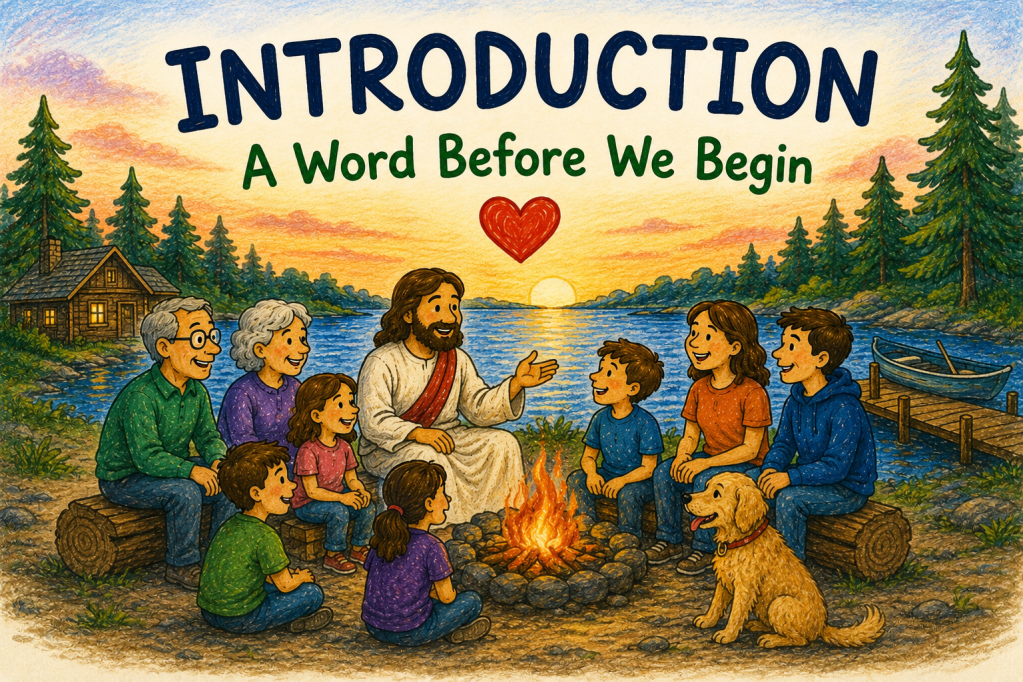
As many of you know, I’ve been attending seminary for the last two years. Alongside those studies, I’ve been exploring the idea of human flourishing. Over time I’ve come to believe that one of God’s deepest intentions is that people flourish—not just as individuals, but as families, communities, nations, and as caretakers of the created world.
The word that has come to capture that vision for me is
shalom
This isn’t just an academic interest. It grew out of a difficult season of life—a diagnosis, a long road back, mental and spiritual struggle, and the ongoing work of recovery and community that continues to reshape how I see faith, work, family, our nation, and the world.
Somewhere along the way, shalom stopped being a Bible-study word and became the word for what I actually wanted: things put back together the way they’re supposed to be.
This devotional is one small piece of a much larger journey, but you don’t need any of that background to take part this weekend.
If you’d like to know more about flourishing let me know, or check out: https://seephas.com/home-2/journeys/flourishing-2/
Every family carries a web of relationships—parents and children, old stories and new ones, people who see the world very differently sitting around the same table. When that web is healthy and whole, we catch a glimpse of shalom.
Shalom is often translated as “peace,” but it’s much richer than that. It describes wholeness, life rightly connected—with God, ourselves, one another, and all creation. It’s a living word still spoken today in Jewish homes and synagogues as both a greeting and a blessing. I believe it should be used much more in Christian circles.
This weekend isn’t so much a Bible study as it is an invitation to notice where we’ve seen broken things become whole.
We’ll spend a few quiet moments before arriving, then one simple activity each day, and finally gather Sunday morning to share what we’ve noticed. No speeches. No perfect answers. Just come ready to listen and say one true thing.
Pre-Work
Before you arrive — 5 minutes
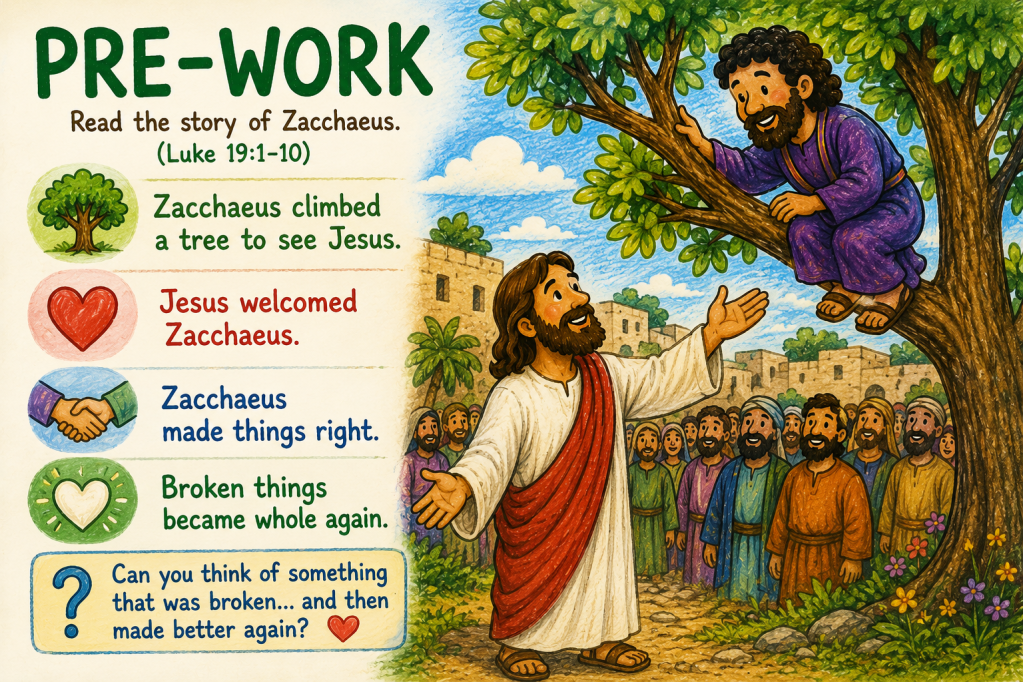
Read Luke 19:1–10, the story of Jesus and Zacchaeus, slowly. Don’t study it. Just let it settle.
If you’re familiar with the spiritual practice of Lectio Divina, read it a few times and simply notice what word or phrase stays with you.
A little context helps.
Zacchaeus was the chief tax collector in Jericho—the supervisor of the other tax collectors. He worked for the occupying Roman Empire, which most Jews saw as a hated oppressor. Together, they collected taxes for Rome while becoming wealthy by demanding more than Rome required and keeping the difference. To many Jews, Zacchaeus wasn’t merely unpopular—he was a traitor who had betrayed his own people. His relationship with his community was deeply broken.
Yet Jesus chose to eat at his house before Zacchaeus had done anything to earn that welcome.
Carry this question with you through the weekend. Don’t answer it yet.
Where in your own life has something broken later been made whole again?
Thursday — Arrival
One thing to do
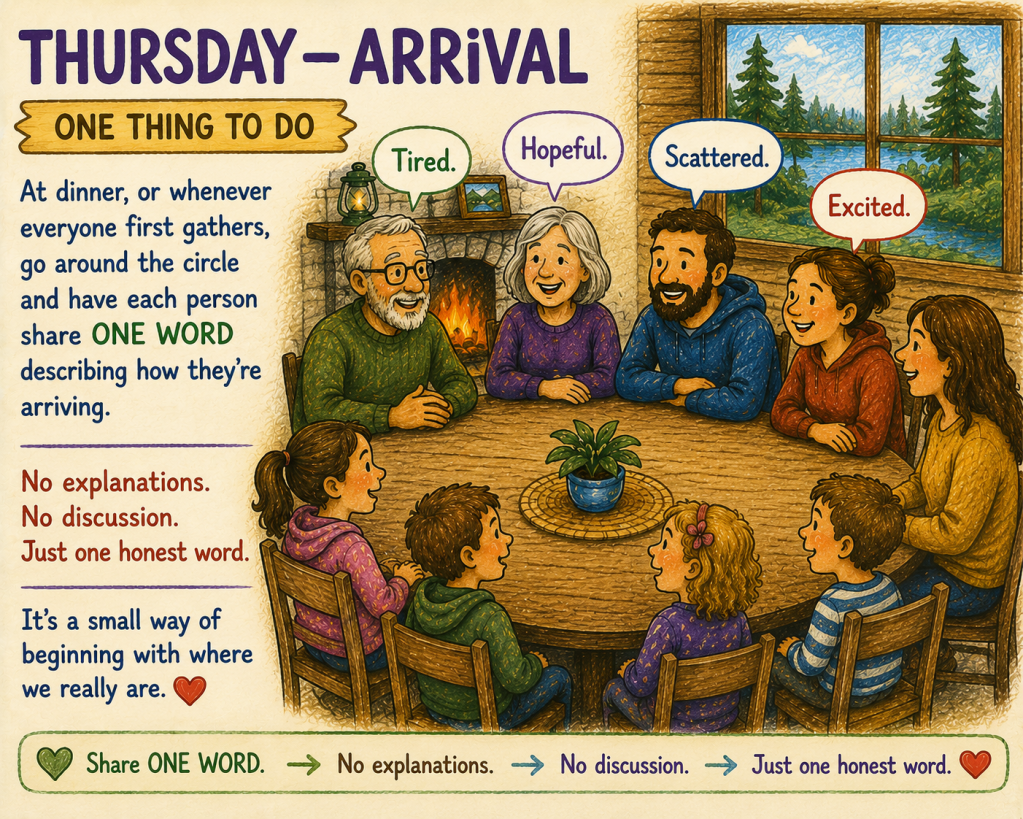
At dinner, or whenever everyone first gathers, go around the circle and have each person share one word describing how they’re arriving.
Tired.
Hopeful.
Scattered.
Excited.
No explanations. No discussion. Just one honest word.
It’s a small way of beginning with where we really are.
Friday — Settling In
One thing to do
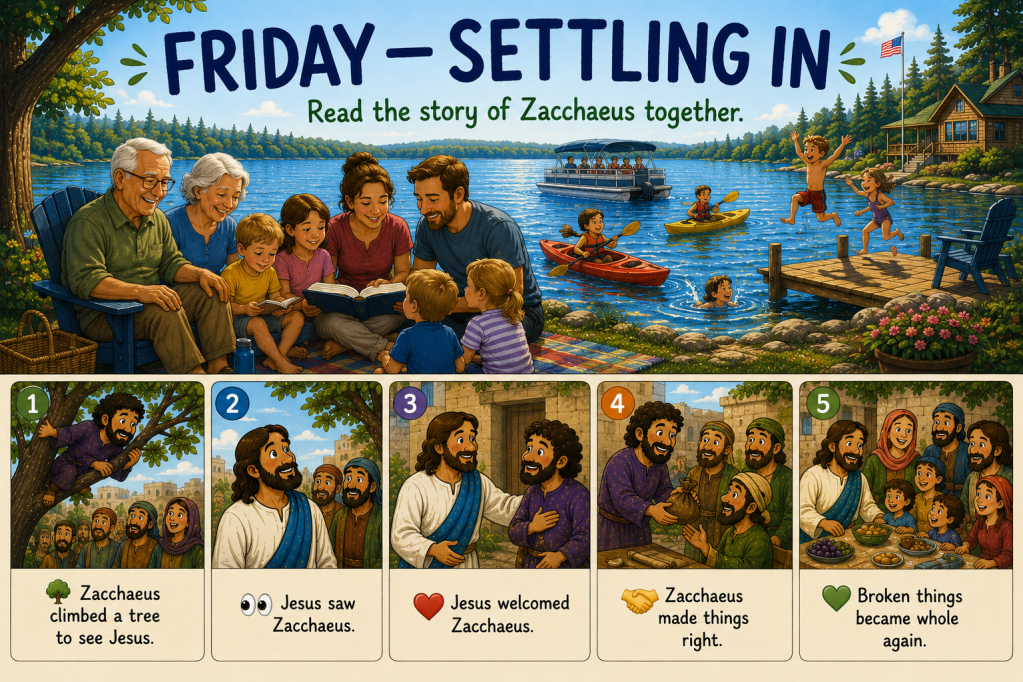
Sometime today, in pairs or small groups, read the story of Zacchaeus out loud. If someone didn’t do the pre-work, this is their chance.
Then simply sit with the story for a minute.
If you’d like something to reflect on quietly today:
Shalom
Shalom isn’t simply peace – the absence of conflict. It’s wholeness – life rightly connected—with God, ourselves, one another, and creation. Sometimes that includes difficult conversations. Peace isn’t avoiding conflict; it’s moving through it toward restoration.
Zacchaeus
Zacchaeus humbles himself by climbing a tree just to catch a glimpse of Jesus. He was known and despised, and likely his life was at-risk. Sometimes healing begins with a small act of courage that feels a little undignified—asking for help, admitting we’re wrong, or simply showing up.
Saturday — Out on the Lake

One thing to do
Sometime today—on the pontoon, in a kayak, playing a game, walking to the dock, wherever you find a quiet stretch—come back to the question from before the weekend:
Where has something broken in your life been made whole again?
Just let one memory surface.
Then, if the moment feels right, tell that story to one other person. A grandparent and child. Two siblings. Husband and wife. Friends.
Don’t perform it.
Just tell it.
If you’d like one more thought to carry with you:
Zacchaeus didn’t settle for the minimum. Under the Jewish law – fraud carried a 20% penalty. Pay 120% to restore the relationship. The penalty for theft was much higher – fourfold – 400%. This is what Zaccheaus chose to pay to restore relationships – the higher penalty.
Real restoration often goes beyond what’s required because love is more interested in healing relationships than settling accounts.
And one final question:
Shalom happens – it is restorative – it is action – often we confine righting brokenness to feeling it in our heart, what might it look like for it to move into action?
A conversation.
An apology.
A gift.
A phone call.
What will restore the relationship?
Sunday Morning Group Session
20–25 minutes
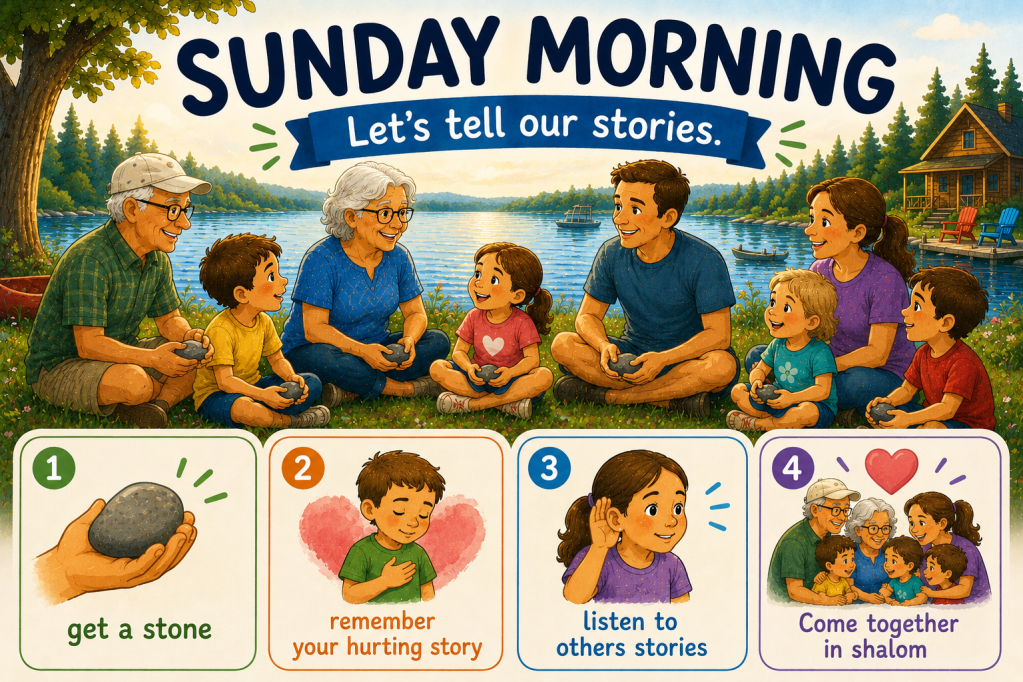
Opening
(1-2 minutes)
“This weekend we’ve been reflecting on one word: shalom.
It’s often translated ‘peace,’ but it means something bigger—life becoming connected the way God intended – and when brokenness happens – restoration.
Our story this morning is about a man whose life had broken those connections, and what happened when they began to be restored.”
The Story
(4–5 minutes)
Retell the story of Luke 19:1–10
- Zacchaeus is the chief tax collector in Jericho. He has become very wealthy serving Rome by taking more than Rome required from his own people.
- To many Jews, he isn’t merely disliked—he is a traitor who has betrayed his community.
- Curious to see Jesus, Zacchaeus does something surprising, humbling and dangerous: he climbs a tree like a child, in public just to catch a glimpse of him.
- Jesus stops beneath the tree, calls Zacchaeus by name, and invites himself to Zacchaeus’s home.
- Before Zacchaeus has changed anything, Jesus publicly welcomes him.
- In that culture, sharing a meal wasn’t simply hospitality—it was a public declaration of friendship, acceptance, and belonging.
- The crowd is shocked and offended that Jesus would choose to associate with a man they despise.
- Zacchaeus responds not with excuses but with action. He gives half his possessions to the poor and promises to repay anyone he has cheated four times over.
- Jesus declares, “Today salvation (restored wholeness) has come to this house,” because what was broken has begun to be restored. This is a picture of shalom—relationships being made whole again.
The Turn
(2–3 minutes)
Notice the order.
Zacchaeus takes a risk just to see Jesus.
Jesus’ welcome comes first – he choses to eat at his house.
Zacchaeus doesn’t change so that he’ll be welcomed.
He’s welcomed—and that changes him.
The change isn’t merely emotional.
Money moves back the other direction.
Relationships begin to heal.
Shalom that stays only in the heart isn’t shalom yet. It eventually finds its way into our actions.
Every family knows what broken connections feel like.
We’ve all taken more than we’ve given at times.
We’ve all drifted.
We’ve all wounded someone.
Shalom isn’t pretending those things never happened.
It’s participating in putting them back together.
The Ritual
(8–10 minutes)
Everyone take a small stone.
Speaking is voluntary.
Households speak.Grandparents begin, followed by each household that wishes to share.
Tell one story about a place where something broken became whole again.
What did the repair actually look like?
What made healing possible?
Closing Blessing
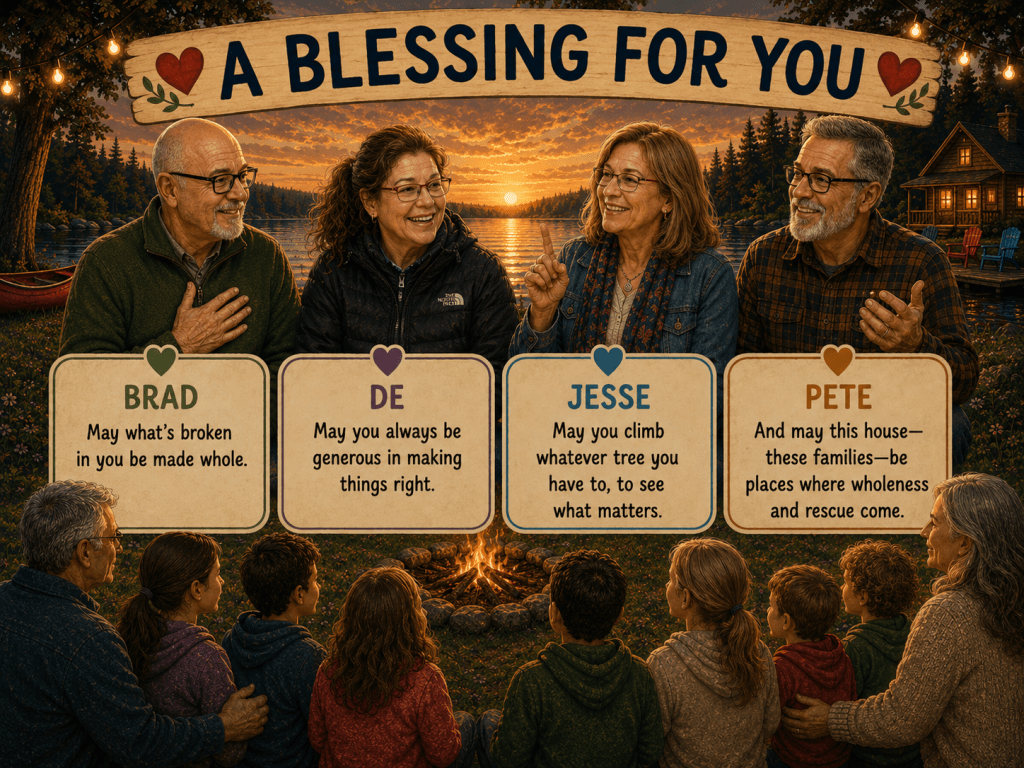
(1 minute)
The four grandparents each speak one line.
Brad
May what’s broken in you be made whole.
De
May you always be generous in making things right.
Jesse
May you climb whatever tree you have to, to see what matters.
Pete
And may this house—these families—be places where wholeness and rescue come.
For more information:
On the interpretation of Luke 19:1–10 – using the ancient practice of PaRDes -> https://docs.google.com/document/d/1PIvni6YzsgmzqD8WEJobLAW1enDv69nZLxuX7TPAJYc/edit?usp=sharing
If you really want to join my journeys and commentary then check out my website – or talk to me first:
 SeePhas