
Before I Name What I Believe
Before naming what I believe, I need to give credit where it is due.
In the fall of 2024, I joined the School of Everyday Mission (SEM), a seminary program offered by Woodland Hills Church. The first year of the program focused on what was called the Meta-Narrative—the broad theological story shaping Woodland Hills, the teaching of Greg Boyd, and a tradition I came to understand as Neo-Anabaptism.
I entered SEM during a season of deep spiritual turmoil. I knew far more clearly what I needed to release from my Christian faith than what I could still affirm. At the time, it felt as though only one thing remained intact:
Jesus’ love.
Over that first year, something unexpected happened. Through study, dialogue, prayer, and careful formation, I began to reconstruct my faith—slowly and deliberately—starting again with Jesus and the shape of his love.
SEM did not give me new answers so much as it gave me a new center.
It helped save my faith in God. More than that, it helped reorient my life. I now find myself able to love God, myself, my neighbor, and creation more freely and fully than at any other point in my life.
For that, I am deeply grateful.
Pause & Reflect
What has shaped your faith—positively or painfully?
What has remained when everything else was questioned?
How These Beliefs Were Formed
What follows are the convictions that have emerged from my faith story.
They are not conclusions reached in abstraction, nor positions adopted to win arguments. They were formed slowly—through love and loss, trust and doubt, deconstruction and re-formation.
I hold these beliefs with conviction, but not with coercion. I expect them to continue to deepen—and in some cases to change—as formation continues.
At the Center
At the heart of my faith is a simple—and demanding—claim:
God is love.
Not merely loving, but love itself.
This love is infinite, unconditional, and most fully revealed in the life, teaching, crucifixion, and resurrection of Jesus of Nazareth.
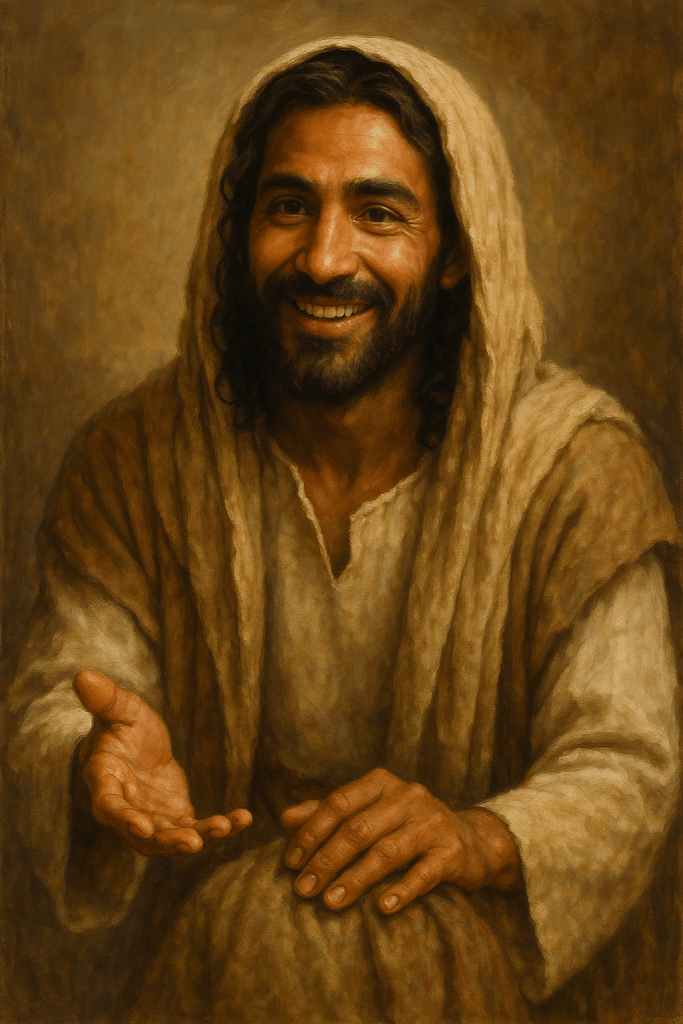
Jesus is, for me, the clearest revelation of who God is and what God is like. Any understanding of God that contradicts the self-giving, enemy-loving, yet socially challenging, nonviolent love of Jesus must be questioned.
My faith is unapologetically Jesus-centered.
Pause & Reflect
When you imagine God, what image or emotion comes first?
How does Jesus shape—or challenge—that image?
God, Humanity, and the World
I believe God is the Creator of all that exists and desires not mere obedience, but trust—and the flourishing of all people, communities, and creation.
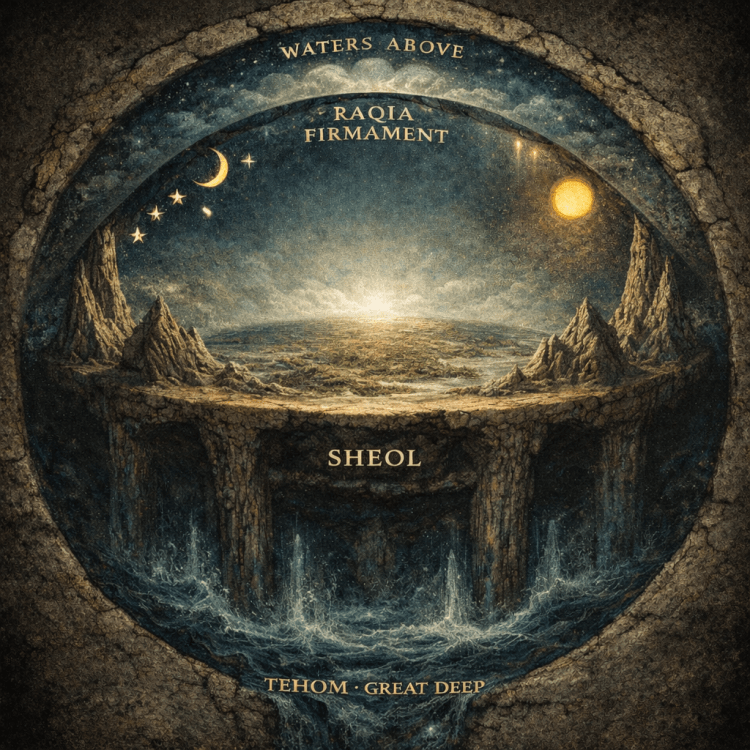

Humanity is created in the image of God and, along with other created beings and powers, has been given genuine freedom.


Within that freedom, a force Scripture names as evil has emerged. This evil is real and active, distorting life and relationships, drawing creation away from God’s intent, and binding us in ways we do not always recognize.
The condition of humanity—and of the world itself—can therefore be described as one of bondage and brokenness, marked by suffering and in need of healing.
As human beings, we remain oriented toward God, yet we are also vulnerable to deception. We find ourselves participating—often unknowingly and unwillingly—in patterns and systems that diminish life. Sin, in this sense, is not simply individual moral failure, but shared participation in a world bent by distortion, bondage, and death.
In this sense, coming to trust God and being restored to right relationship is rescue and healing—what many faith traditions mean by being saved. We are saved to our true humanity as God intended, not from hell.
Evil is real. Suffering is real. But neither originates in God’s character nor reflects God’s desire for creation.
God is not the author of evil. God is opposed to it and is actively at work against it.
Pause & Reflect
Where do you see goodness in the world that feels bent, constrained, or misdirected rather than destroyed?
What patterns—personal or systemic—might be shaping your life away from trust and toward fear or control?
Jesus
I do not begin with an abstract definition of Jesus.
I begin with a life.
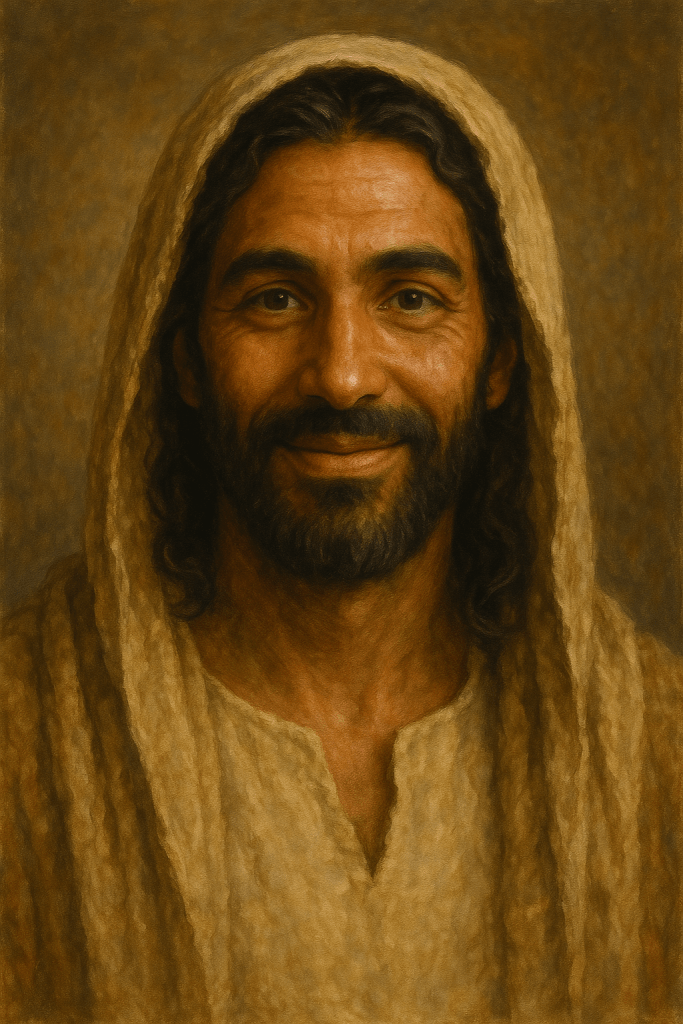
I affirm the historic Christian confession that Jesus of Nazareth is the incarnation of God – fully human and fully divine. But this confession did not arise in a vacuum. It emerged because, in Jesus, people encountered God moving toward them, not away.
Jesus lived among us.
He did not rule from a distance or teach from safety. He walked dusty roads, touched the sick, welcomed the outcast, confronted lies, and spoke truth with compassion. In him, God was not theoretical. God was present.
Jesus revealed what God is like—not through domination or control, but through healing, mercy, and faithfulness. Wherever Jesus went, life was restored, dignity was returned, and those crushed by religious, social, or political power were lifted up.
Jesus’ Conflict with the World
This way of life brought Jesus into conflict—but not in the way it is often assumed.
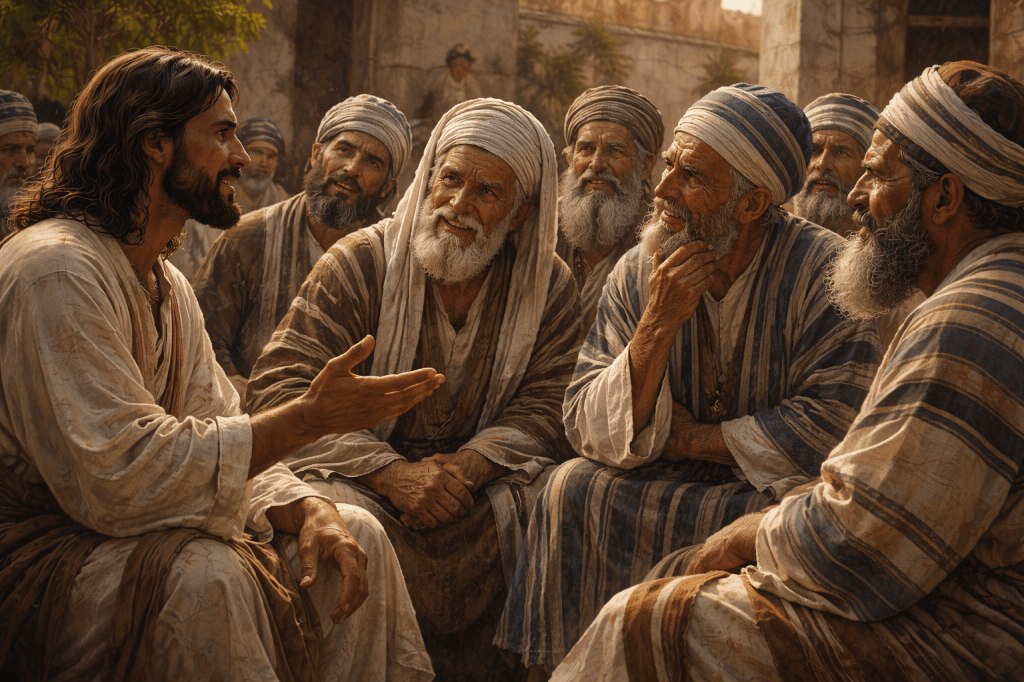
Jesus did not attack sincere religious faith. He did not condemn those striving to live faithfully under the Law. With the Pharisees, he most often engaged in debate and argument—as one Jewish teacher among others—calling them deeper into mercy, justice, and faithfulness.
His strongest condemnation was aimed elsewhere.
Jesus confronted the corrupt religious authorities who had aligned themselves with imperial power – especially the Temple leadership tied to the Sadducean elite. These leaders benefited from Roman rule and oversaw a Temple system entangled with wealth, exclusion, and exploitation.
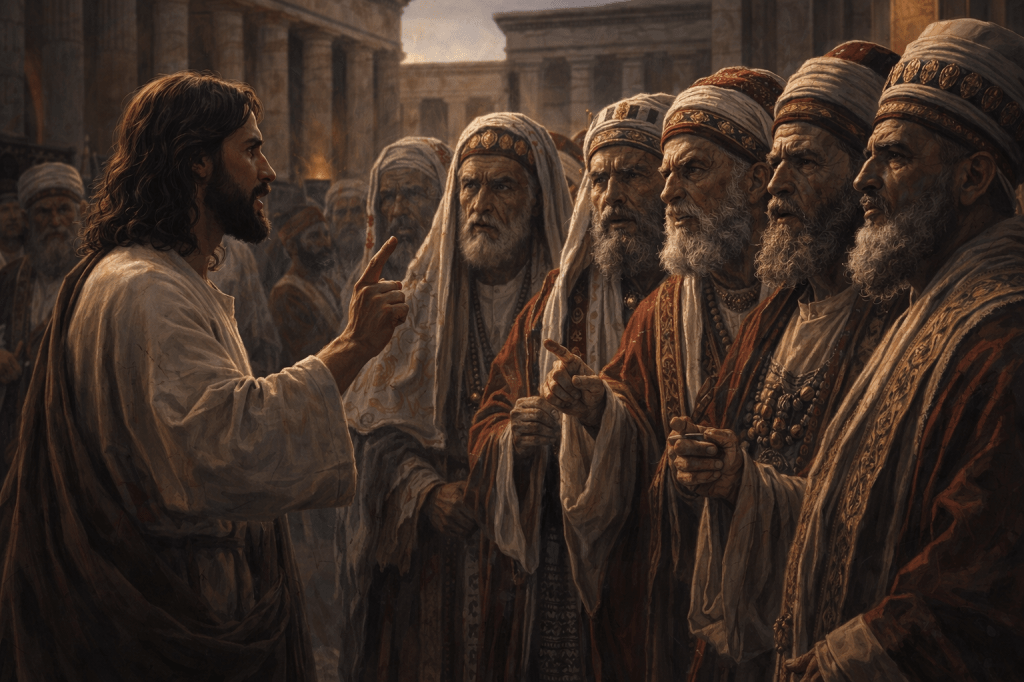
It was this fusion of religion, power, and empire that Jesus denounced.
By challenging the misuse of the Temple and announcing God’s reign apart from imperial control, Jesus threatened an entrenched system of power and profit. His faithfulness exposed corruption, and that exposure made him dangerous.
This is why Jesus was crucified.
Not because he failed.
Not because he rejected religion.
But because he confronted a system that used God’s name to justify oppression.
And as God, his life was vindicated, so is ours.
Jesus was bodily resurrected—not as an escape from the world, but as the beginning of its healing. Resurrection is not the rejection of creation, but God’s declaration that corruption, violence, death, and domination do not get the final word – nor are they reality. That our true reality is with God, restored, taken care of.
Jesus is Messiah—first for Israel, and through Israel, for the world. In him, God’s long story of covenant, promise, and restoration reaches its climb and decisive turning point.
And the story is not finished.
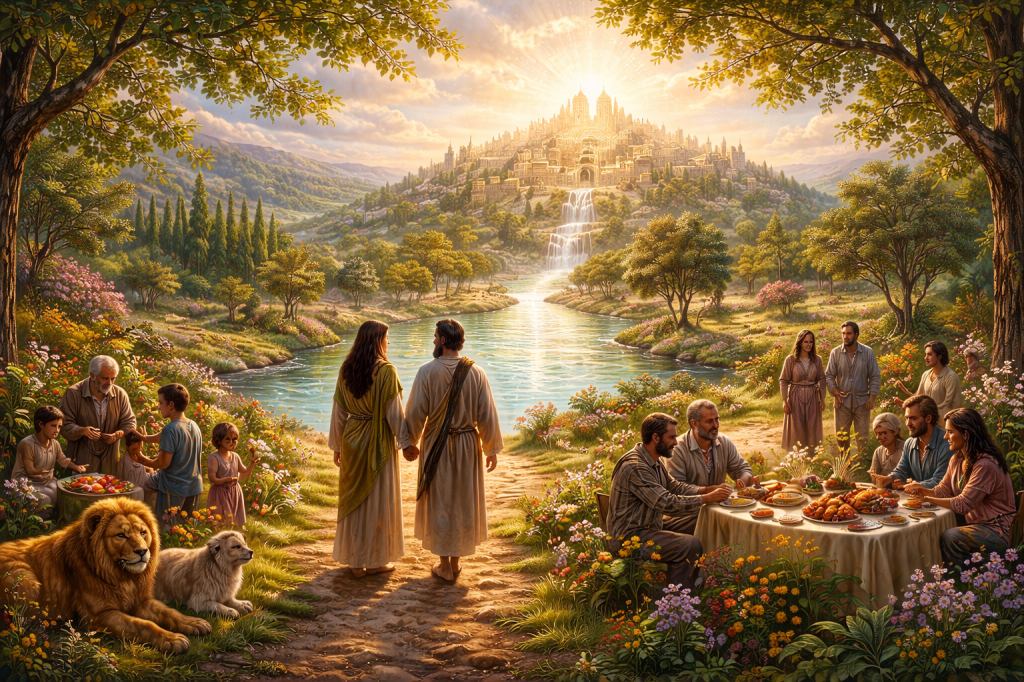
Jesus promises to return, not to abandon creation, but to complete the work he began – to set right what remains broken and renew the world to its fullness.
At the center of Jesus’ life and death is self-giving love:
love that refuses to retaliate,
love that confronts evil without becoming it,
love that trusts God more than power.
This is the Jesus I trust.
And this is the love around which I am still learning to order my life.
Pause & Reflect
How does Jesus challenge conventional ways we think power works?
What kind of love does he invite you into?
If you believe in Jesus and resurrected life, what world do you anticipate?
The Trinity
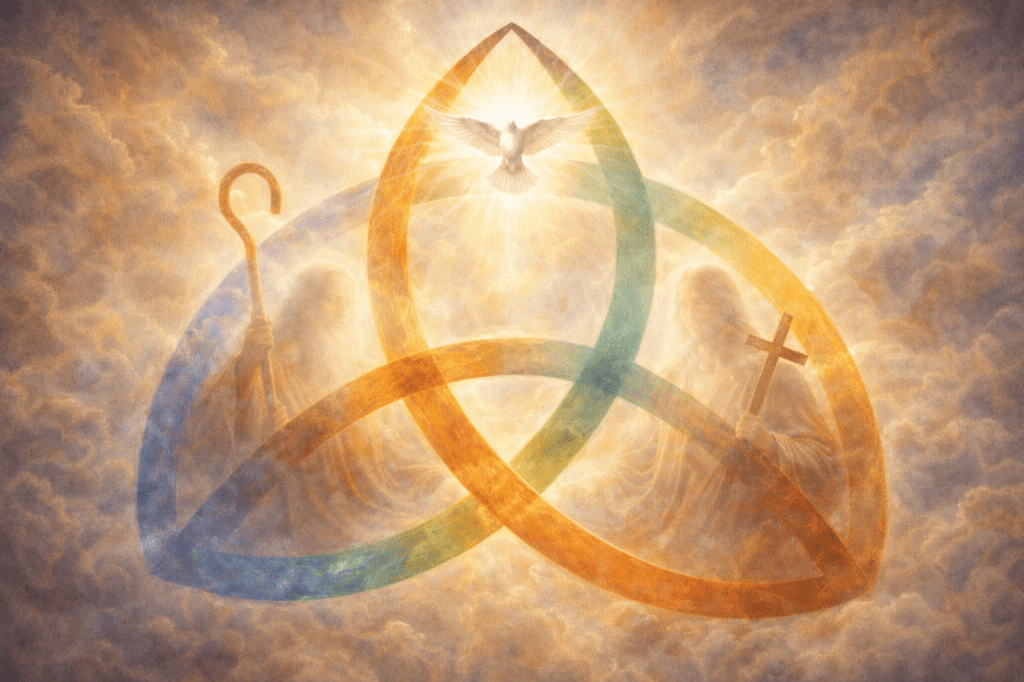
I understand God as Trinity: Father (or parent), Son, and Spirit—an eternal relationship of love.
Rather than a philosophical puzzle, the Trinity names a reality:
Love is at the very heart of God’s being.
God is relational before creation—not solitary, not domineering. Love is not something God does occasionally; it is who God is eternally.
Pause & Reflect
What changes if reality itself is rooted in relationship rather than control?
Scripture
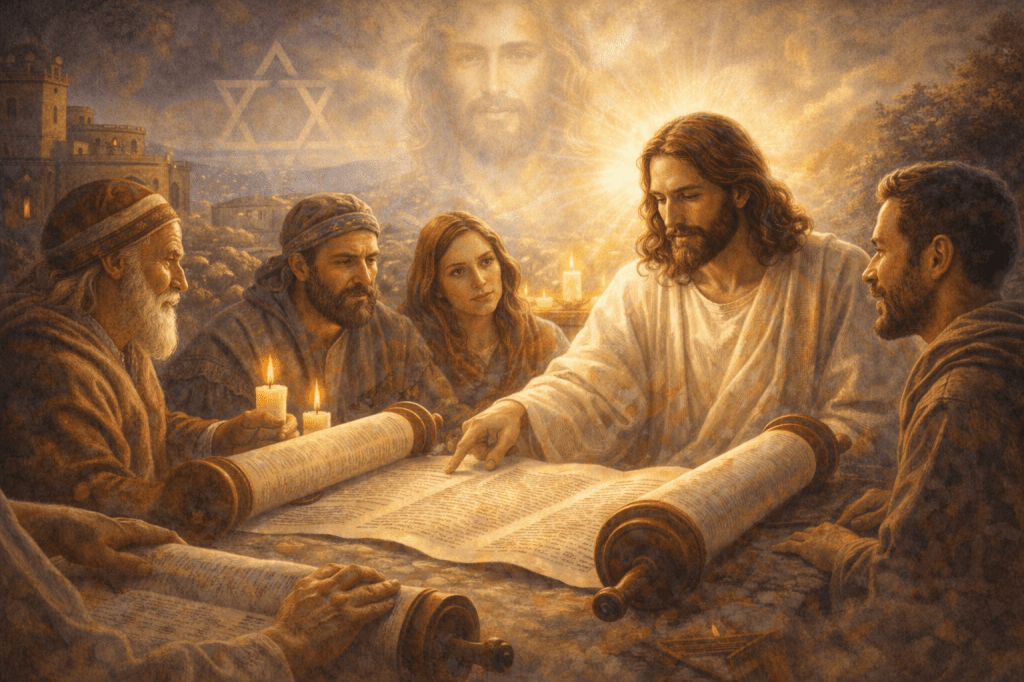
I receive Scripture as a living, formative story—not a weapon, not a rulebook, and not a flat text.
The Bible tells a unified story that leads to Jesus. It must be read attentively, historically, and communally, with special care given to its Jewish roots and the long arc of its narrative.
I do not believe every biblical text equally reflects God’s character. Jesus is the lens through which Scripture is ultimately discerned.
The Way of Faith
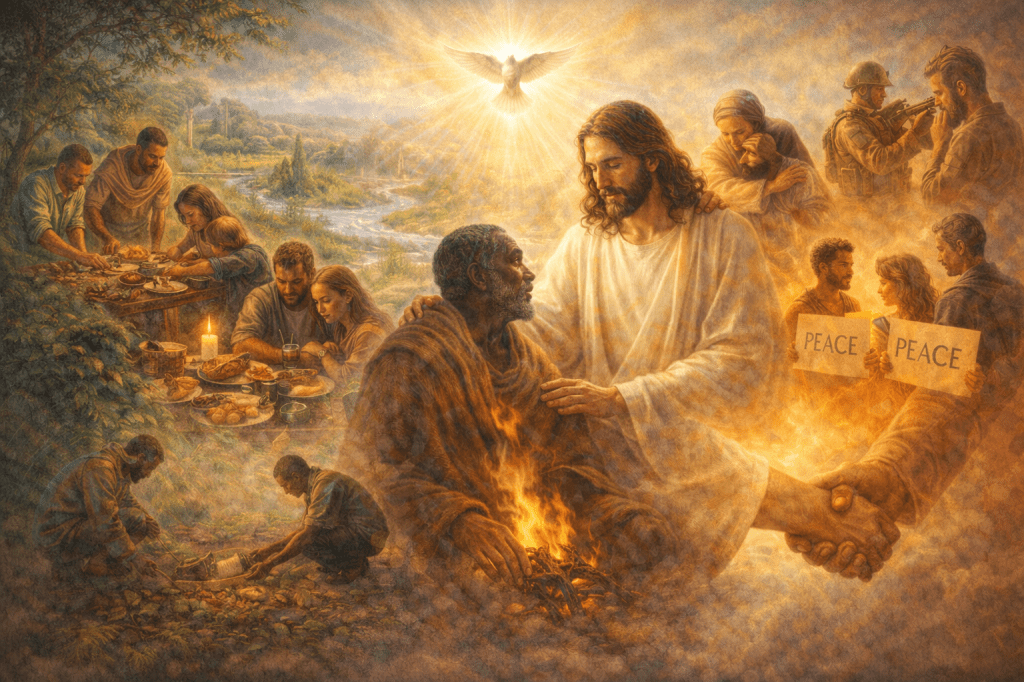
I understand Christianity not primarily as a system of beliefs to be affirmed, but as a way of life to be lived.
This way is shaped by love—love received, and love practiced. It draws us into a life oriented toward God and toward others, not through control or certainty, but through trust and faithfulness.
To walk this way is to learn how to love God and neighbor together—to discover that devotion to God cannot be separated from care for people. It is to practice enemy-love in a world formed by fear and retaliation, and to seek justice not as punishment, but as restoration.
This way calls us to stand with those made vulnerable by systems of power, to resist violence and domination in all their forms, and to care for creation as a shared gift rather than a resource to be consumed.
It is a way marked by humility rather than triumphalism, courage rather than coercion, and hope rooted not in outcomes, but in trust.
Faith, in this sense, is not measured by how certain we are, but by how faithfully we live in response to love.
Pause & Reflect
What practices might help you live more faithfully, even when clarity is absent?
Where does following Jesus feel most concrete in your daily life?
Holding These Beliefs
I hold these beliefs seriously, but not rigidly.
They are not offered as instructions to follow, arguments to win, or boundaries to enforce. They are offered as a witness—to what has formed me, to the questions that have shaped my faith, and to the God I have come to trust.
These convictions have not ended my searching. They have given it direction.
I expect them to continue to be examined, tested, deepened, and—at times—reshaped, as formation continues. Faith, for me, is not a finished system, but a life still being lived in response to love.
For those who wish to explore how these beliefs continue to be questioned and worked out over time, I’ve written further reflections on faith and formation.
Final Pause & Reflect
What questions feel alive for you right now, rather than resolved?
Which of these convictions resonated most deeply—or unsettled you most?

 SeePhas