
The Help That Sees You, Holds You, and Heals You
Later that same therapist friend (mentioned in Bad Help – Part II) invited me into the therapeutic program he oversaw.
I took him up on it.

And for the first time, I encountered something I had never experienced before:
Good help.
Good help is different from advice, coaching, “tough love,” or intellectual insight.
Good help:
- sees your whole life, not just your symptoms
- understands how you became who you are
- knows that wounds form early and run deep
- creates safety before asking for change
- treats survival strategies as wisdom, not weakness
- offers presence, not pressure
- heals at the level where the injury began
Good help doesn’t rush.
Good help doesn’t shame.
Good help doesn’t moralize, theologize, or pathologize.
Good help understands your story as a story—not a diagnosis, not a performance review, not a spiritual test.
In good help, you discover:
- who you truly are
- why you developed the patterns you did
- what your early environment gave—or did not give
- where the pain began
- how it shaped your attachments, emotions, beliefs, and defenses
Good help doesn’t fix you.
Good therapy doesn’t dictate.
But good therapy absolutely guides.
WHAT GOOD THERAPY ACTUALLY DOES
Part of healing is learning about the therapy and the map: how identity, emotions, wounds, relationships, and spirituality all connect.
Good therapy guides you through specific terrain:
Identity
- Are you comfortable with your emotions?
- Are you secure in who you are—including your God-identity?
- And, with this, guidance. The Book: Life of the Beloved, by Henri Nouwen

Relationships
- Do you form secure bonds, or do attachment wounds dominate your life?
- And with this guidance – an attachment style test: https://openpsychometrics.org/tests/ECR.php?utm_source=chatgpt.com
Internal World
- What are your triggers?
- Do those triggers point to deeper injuries, to traumas?
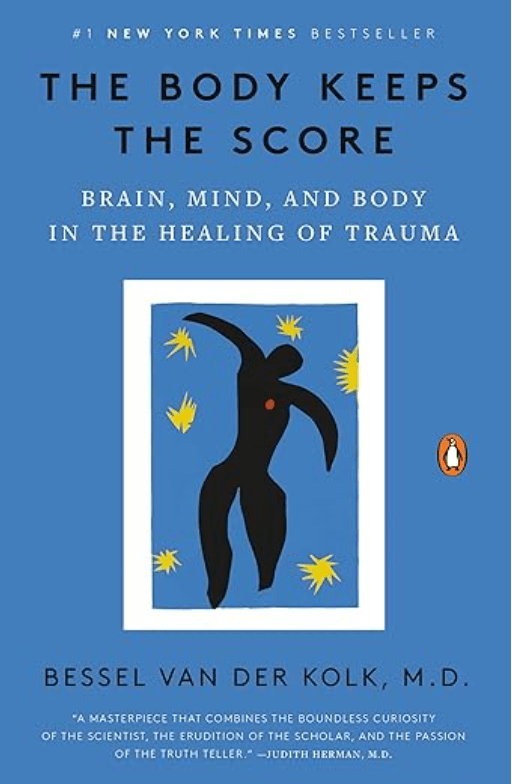
- Guidance – Book: The Body Keeps the Score: Brain, Mind, and Body in the Healing of Trauma, by Bessel van der Kolk
Integration
- Can you connect your internal world to your family, community, nation, and the world around you?
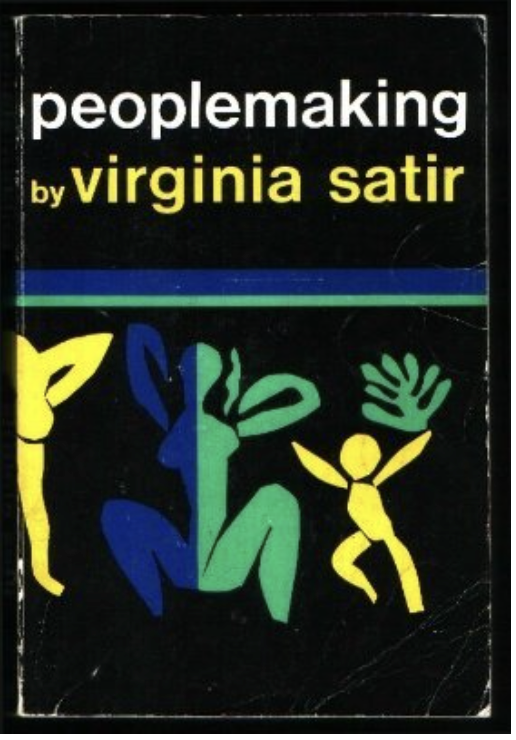
- Guidance book: Peoplemaking by Virginia Satir
Parts of Yourself
- Can you identify the parts of your psyche?
- Do you know where your God-part is?
- Is it buried, ignored, or alive?
- Guidance book: Altogether You: Experiencing personal and spiritual transformation with Internal Family Systems therapy, by Jenna Riemersma

Healing and Vision
- Have you healed the parts that cause chaos?
- Can you reflect on yourself, the cosmos, and God—and form a vision for your life?
- For healing, IFS (Internal Family Systems) has a healing process as part of the therapy itself.
- For Vision, I am still searching – this is where I feel I must let my faith be my guide – as I believe God sets the vision as “creator” and it is up to me to find my place within God’s much bigger vision for the cosmos, our world, and for me. The one thing I do know, firmly, is that the essence of God is love. And therefore my vision must start with how do I follow the quadripartite love God envisons:
- Love God
- Love myself
- Love my neighbors, including those I may consider my enemies.
- Love the world, our creation.

These are the waypoints on the journey.
Good therapy helps you notice them.
Bad therapy leaves you wandering in circles.
Good Therapy (Integration):
- Has direction
- Reveals deeper patterns
- Helps you heal
- Connects identity → relationships → community → God
- Moves you toward coherence, wholeness, and vision
- Bad Therapy (Fragmentation):
- Wanders aimlessly
- Feels circular
- Creates dependence
- Avoids depth
- Leaves you unchanged—all while the therapist feels oddly self-satisfied
Good therapy is a journey with landmarks.
Bad therapy is a cul-de-sac.
Closing Thoughts
Therapy, at its best, is sacred work. It helps a person reclaim identity, heal wounds, integrate parts, and rediscover their God-part. It is guidance, not games; clarity, not confusion.
Good help finds you—the real you, the wounded you, the young you, the beloved you—and brings that person into the light with gentleness.
Good help is help that actually helps.
➡️ Read Part IV/journey-into-good-help-part-4-healing
 SeePhas