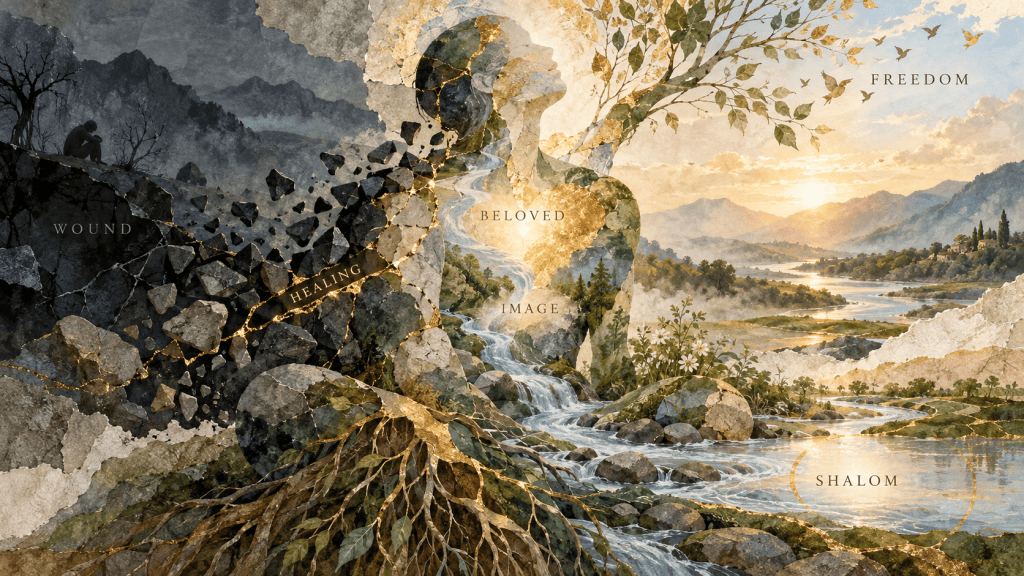
What Does It Mean to Be Human?
My Theological Anthropology
Peter T. Brandt
Revised September 2026
Wow. That is a big pair of words—seemingly drawn from two very different neighborhoods.
Isn’t anthropology the study of human beings and human societies? And isn’t theology the study of God and the divine?
Put them together, however, and they ask one of the most important questions we can face:
What does it mean to be human in relation to God?
For me, that question became deeply personal. It caused me to ask how my Christian beliefs define my humanity—and whether some of those beliefs might actually work against it. It made me consider more carefully how my humanity fits with what God might have to say about human beings, including me.
Theological anthropology became an organizing framework for my beliefs. Do the things I believe about God make sense of who I am as a human being? What do those beliefs produce in me? Do they move me toward love, freedom, wholeness, and flourishing—or toward fear, shame, exclusion, and self-rejection?
Shouldn’t my beliefs about God be consistent with the humanity God created? If I say I live my faith, shouldn’t that faith become visible in how I live as a human being? And shouldn’t all of this work together for good—for life, healing, relationship, and flourishing?
As I began thinking seriously about how God and humanity belong together, I discovered that some of my inherited beliefs no longer fit.
Does God really see me as fundamentally depraved? Does God expect me to become something other than a limited, imperfect human being? Does God love me while also threatening to send me to hell if I fail to believe or behave correctly?
Or have I misunderstood God, humanity, or both?
Why I Begin Here
Many formal statements of Christian belief begin with propositions about God: God is eternal, omnipotent, omniscient, Creator, and triune. These beliefs matter, and I will address them elsewhere within my Core Beliefs.
But they are not where I begin.
A person can affirm these doctrines and still hold very different beliefs about God’s character, humanity, power, suffering, judgment, and salvation. Saying that God is omnipotent does not tell me how God uses power. Saying that God is omniscient does not tell me whether God determines every human action. Affirming the Trinity does not guarantee that our lives and communities will reflect relational, self-giving love.
I have learned that beliefs cannot be evaluated only by whether they sound orthodox. I must also ask what kind of God they portray, what understanding of humanity they create, and what they produce when they are embodied.
This became necessary because some of the Christian beliefs I inherited had consequences. Humanity was described as depraved. God’s sovereignty became control over every event. Salvation became rescue from what God might do to us. Hell became part of the system. These ideas produced fear, shame, exclusion, and spiritual trauma, even while surrounded by familiar Christian language.
I begin with theological anthropology because this is where theology touches the ground. It reveals how beliefs about God shape our understanding of ourselves, our neighbors, our enemies, our purpose, and our future.
This is not an attempt to place humanity above God. God comes first in reality. But the human relationship with God comes first in how I explain my Core Beliefs because it provides the doorway into everything else.
As I later consider God’s power, knowledge, eternal nature, justice, and triune identity, I will ask how each belief is revealed in Jesus and what kind of life it produces. Does it resemble self-giving love? Does it honor human freedom and embodied life? Does it move creation toward shalom?
Theological anthropology comes first because it identifies the question running beneath all my other beliefs:
What does the God I believe in mean for what it means to be human?
My Theological Anthropology
What follows is my understanding of human nature, purpose, brokenness, healing, and destiny.
1. What Are Human Beings?
Human beings are beloved, embodied image-bearers, created in love and for love. We possess genuine freedom, are made for relationship, and are entrusted with participating in God’s care for creation.
Created Good and Beloved
Human beings are created in the image and likeness of the all-loving, self-giving God revealed in Jesus. Bearing God’s image is both an identity and a vocation. We are created to reflect God’s character through love, relationship, creativity, stewardship, and care for creation.
The image of God is not something we earn through achievement, behavior, or correct belief. It is given to us in creation. Sin, trauma, illness, disability, failure, and the judgment of others may obscure that image, but they do not erase it.
Human beings are not created depraved, worthless, or repulsive to God. We are part of the creation God calls very good. Human evil is real, but it is the distortion of something originally and fundamentally good. Our brokenness is not our deepest identity.
Our worth comes from being created and loved by God. It does not depend upon wealth, status, power, productivity, tribe, ideology, success, failure, or theological certainty. We belong to God before we accomplish anything for God.
Embodied, Free, and Relational
I understand human beings as integrated, embodied beings. In scripture, the Hebrew word nephesh, often translated as “soul,” ordinarily refers to the living person or life, not to an immortal entity temporarily housed within a disposable body.
We do not merely possess bodies. Our bodies are part of who we are. I therefore reject the body-soul dualism—strengthened in some later Christian interpretations by Greek and Neo-Platonic thought—that treats the soul as the true person and the body as temporary or inferior.
This matters because redemption must include the whole embodied person, not merely the rescue of an inner soul.
Human freedom is also real, although never absolute. Our choices are shaped by our bodies, histories, relationships, cultures, wounds, fears, opportunities, and social conditions. These influences help explain our actions, but they do not eliminate our agency or responsibility.
We are created for relationship with God, other people, ourselves, and the rest of creation. Harm in one of these relationships spreads into the others; healing in one can begin to restore the whole. Human flourishing is therefore relational and communal, not merely private or internal.
Created for Vocation
Humanity is entrusted with the care and cultivation of creation. This is not permission to dominate other people or the earth. Bearing the image of the self-giving God means exercising responsibility through care, service, creativity, and stewardship.
Within this shared human vocation, each person may also have a particular calling—a unique way of participating in God’s work of shalom. That calling may involve repairing what has been broken, sustaining what is already good, or helping create what could contribute to the flourishing of people, communities, or creation.
Our vocation grows from belovedness. It is not how we earn God’s love or prove our worth.
2. Why Are We Here?
Because God is love, humanity is created to love. We are here to receive, embody, and extend that love in relationship with God, other people, ourselves, and creation.
Our purpose is not to escape the world, earn God’s acceptance, prove that we belong, or secure a place in heaven. We are invited to participate with God in the life, healing, care, and flourishing of creation.
Created to Love and Follow Jesus
Jesus described the heart of faith as loving God and loving our neighbors as ourselves. These loves belong together. Love of God cannot be separated from how we treat other people, relate to ourselves, or care for creation.
Love is more than emotion, affection, or correct belief. It is an active commitment to seek the good of another. It moves toward truth, relationship, healing, justice, reconciliation, and life.
Jesus is the clearest picture of a human life shaped by this love. To follow him is to learn his way of compassion, courage, humility, service, forgiveness, peacemaking, and enemy-love.
This is not passivity in the presence of injustice. Jesus confronted religious abuse, exploitation, exclusion, hypocrisy, and empire. Yet he resisted evil without becoming shaped by the violence and domination he opposed. Following Jesus means more than affirming beliefs about him. It means learning to live as he lived.
Participating in Shalom
The scriptural word that best describes human and creational flourishing is shalom. Shalom is more than the absence of conflict. It is life made whole: right relationship with God, others, ourselves, and creation.
It includes reconciliation, restorative justice, material sufficiency, health, safety, belonging, beauty, meaning, and the opportunity for life to flourish.
We participate in shalom whenever we heal what has been wounded, reconcile what has been divided, restore what has been taken, protect what is vulnerable, sustain what is good, or help create something that contributes to life.
This work may be personal, relational, communal, economic, political, or ecological. No part of life is outside God’s concern.
Resisting What Diminishes Life
Participating in flourishing means opposing what destroys it. We resist evil, death, hatred, injustice, empire, and the powers that exploit people and creation.
Our resistance must remain consistent with the God revealed in Jesus. We cannot pursue shalom through hatred, dehumanization, domination, or revenge without reproducing the evil we oppose.
We also seek enough for all to flourish. Scarcity diminishes life when people are denied what they need. Excess diminishes life when accumulation separates us from others, consumes creation, or gives some people power over the lives of many.
Human flourishing is not measured primarily by wealth, status, comfort, or individual success. It is measured by the quality of our relationships and by whether our lives contribute to the healing and flourishing of others and creation.
3. What Has Gone Wrong?
Human beings are created good, but we are born into a world that is not as God intends it to be. Before making any conscious choice, we enter families, histories, cultures, relationships, and systems already shaped by sin, trauma, suffering, injustice, violence, and death.
We inherit the consequences of human brokenness, but we are not merely its victims. Through our own choices, we also participate in it. We are wounded people who sometimes wound others—and free people who sometimes knowingly choose against love, relationship, and the good.
Sin as Distortion and Fracture
Sin is more than breaking a rule or violating a religious code. It is the distortion of God’s good creation and a departure from God’s intention for life.
Because human beings are created for love and relationship, sin includes whatever damages love, fractures relationship, diminishes life, or prevents flourishing. It distorts our relationships with God, other people, ourselves, and creation.
Sin can appear as violence, hatred, exploitation, deception, greed, domination, indifference, or the refusal to love. The effects of sin can also appear inwardly as shame, resentment, self-rejection, isolation, and the belief that either we or others are beyond love.
Personal sin spreads outward. Repeated choices become patterns, and patterns become embedded in families, cultures, institutions, economies, nations, and religious systems. Sin is something we do, something done to us, and something that can become organized into the world around us.
Wounded—and Responsible
Much human sin emerges from what has happened to us. Trauma, neglect, fear, deprivation, humiliation, exclusion, abuse, and suffering shape how we understand ourselves, God, and others. They can teach us to survive through withdrawal, aggression, control, accumulation, people-pleasing, or self-protection.
Understanding this should produce compassion, but compassion does not require denying harm. What has happened to us helps explain what we do; it does not eliminate our agency or responsibility. Unhealed pain can become pain inflicted upon others.
Healing therefore requires truth, accountability, protection for those being harmed, and change. We can recognize the wounds beneath destructive behavior without excusing it or reducing a person to the worst thing they have done.
Freedom and Rebellion
Not all sin can be explained by wounds, ignorance, or oppressive systems. Because human freedom is real, people can recognize what is loving and good and still choose against it.
We can resist God’s invitation, reject relationship, place ourselves at the center, and pursue control, pleasure, security, wealth, status, or power at the expense of others. We may know that our actions cause harm and continue because that harm benefits or protects us.
This is rebellion: not honest doubt, human limitation, emotional struggle, or failure to hold the correct religious beliefs, but a willful turning away from love and God’s intention for life.
Genuine freedom must include the possibility of saying no to God. But God’s respect for freedom does not mean indifference to harm. God confronts evil, protects those being harmed, and calls those causing harm toward truth, repentance, and restored relationship.
The Powers and Empire
Human brokenness is larger than individual wrongdoing. scripture describes sin and death as powers that hold humanity and creation in bondage. It also speaks of spiritual powers and authorities that work through fear, accusation, deception, violence, and domination.
The powers distort what God created for good. Authority becomes domination. Community becomes tribalism. Religion becomes control. Wealth becomes accumulation. Difference becomes hierarchy. Fear becomes violence.
Empire is what happens when humanity collectively abandons its vocation. It organizes life around domination, hierarchy, violence, accumulation, and exclusion. It creates abundance and security for some by imposing scarcity and insecurity upon others.
Empire is not limited to governments. Its logic can shape economies, political movements, churches, organizations, families, and individual relationships.
Yet the image of God remains. Sin distorts our humanity; it does not erase it. Even willful rebellion does not transform a person into something worthless or place that person beyond God’s love. It does, however, deepen the need for judgment, repentance, healing, and transformation.
4. What Does Healing Look Like?
Redemption is God’s work of saving, healing, liberating, reconciling, and renewing everything damaged by sin, death, and the powers.
Salvation is not primarily about escaping the earth, rescuing an immortal soul from the body, or persuading God not to punish us. God is not the danger from which Jesus saves us. God is the one who, in Jesus, comes to rescue us from everything that opposes life.
Salvation as Restoration
Sin binds us through what has been done to us and what we have chosen. Death holds humanity through fear and mortality. The powers organize personal and collective brokenness into systems of domination and harm.
Salvation addresses all of these. It heals the wounded, confronts rebellion, liberates those held captive, restores fractured relationships, and frees humanity to become what God created us to be.
Because human beings are embodied wholes, redemption must include bodies, minds, relationships, communities, and material conditions. It cannot be reduced to an internal spiritual experience or a change in our status before God.
Shalom must include bodily health, material sufficiency, economic justice, safety, belonging, and right relationship. This does not mean every wound or illness will be healed within our present lives. It means none of them is beneath God’s concern or outside the reach of God’s ultimate restoration.
The Cross and Resurrection
Jesus’ death was sacrificial, but not because God required suffering or blood before becoming willing to forgive. The cross does not transform an angry God into a loving God. It reveals the love that has always been moving toward us.
At the cross, human sin, religious accusation, political power, violence, and empire converge upon Jesus. He does not defeat them by returning violence for violence. He absorbs their hostility, forgives his enemies, and remains faithful to self-giving love even unto death.
God was not punishing Jesus instead of us. In Jesus, God entered human violence and suffering, exposed the powers behind them, and broke their claim to be the final authority over creation.
The bodily resurrection is God’s answer. It vindicates Jesus and his way of love while revealing that sin, empire, violence, and death will not have the final word. God does not rescue Jesus from embodiment; God raises him bodily. Resurrection is the beginning of renewed creation.
Because Jesus is raised, our destiny is also resurrection: whole, embodied life with God within restored creation. Death is real, but it is not our destination.
Mercy, Repentance, and Participation
God’s love and mercy move toward us before we ask. Confession is not a payment required to make God merciful. It is the truthful naming of what has been broken and how we have participated in it.
Repentance is the act of turning away from what diminishes life and back toward God, love, relationship, and shalom. God’s love remains present, but reconciliation cannot be experienced while we continue clinging to the harm and domination that fracture relationship.
Redemption restores relationship with God, others, ourselves, and creation. It requires truth, protection for those who have been harmed, accountability for those who caused harm, and the repair of what can be repaired. Restoration does not require forced proximity or the absence of consequences.
God’s work of redemption is something we receive and are invited to join. We participate whenever we heal what has been wounded, liberate what has been bound, reconcile what has been divided, confront what destroys life, restore what has been taken, or care for what God has made.
5. What Is Our Ultimate Destiny?
God’s ultimate purpose is the renewal of humanity and all creation. The story does not end with God abandoning the earth, rescuing a portion of humanity, or preserving evil and suffering forever. It ends with resurrection, reconciliation, renewed creation, and the fulfillment of shalom.
Our destiny is not escape from being human. It is the restoration of our full humanity.
Resurrection and Renewed Creation
The Christian hope is not that an immortal soul leaves the body for a distant heavenly realm. It is the resurrection of the dead and the renewal of creation.
The biblical story moves toward God dwelling with humanity, heaven and earth brought together, and creation healed from everything that has diminished it. God’s Kingdom comes fully—not somewhere else, but within restored creation.
The future God intends is marked by healing, beauty, abundance, justice, belonging, reconciliation, and flourishing. Bodies matter. Relationships matter. Communities matter. The earth matters. Nothing God created and called good is disposable.
Judgment and Restoration
God’s future includes judgment because shalom cannot exist while evil remains hidden, harm remains unanswered, or oppression continues.
Judgment exposes what is false, confronts rebellion, protects and vindicates those who have been harmed, and holds those who cause harm responsible. It brings human lives and systems of power into the truth.
God’s judgment is not the opposite of God’s love. It is what love does when confronted by everything that destroys life. Divine justice sets things right. Its purpose is the defeat of evil, the healing of creation, and the restoration of right relationship—not the preservation of suffering forever.
Hope for the Restoration of All
Human freedom and resistance are real. Love cannot be coerced, even by God. I do not know precisely how God will address every human refusal or how long that healing may require.
But I trust that God does not abandon those who resist. Love does not force a “yes,” but neither does it stop seeking, confronting, persuading, healing, and inviting.
I therefore place my hope in the ultimate restoration of all things. This hope does not deny sin, judgment, freedom, or the seriousness of evil. It takes them seriously enough to believe they must finally be healed and defeated—not preserved eternally.
I cannot reconcile the God revealed in Jesus with everlasting conscious torment. Nor can I understand the final destruction of human beings as the fullest expression of God’s restorative purpose. If every person bears God’s image, no person can be reduced to waste without something precious to God being lost.
I do not claim to know the process, timing, or experience through which God brings restoration. But I trust that God’s love is more patient than human resistance, God’s healing is deeper than human woundedness, and God’s life is stronger than death.
The final victory of God is not the destruction of God’s enemies but the defeat of enmity itself. Self-giving love triumphs by transforming enemies into friends, overcoming evil without becoming evil, and defeating death through resurrection.
This future shapes how we live now. We participate in our destiny whenever we embody the love, justice, healing, reconciliation, and flourishing that will one day characterize all creation.
What This Changes for Me
This theological anthropology is not simply a collection of ideas about human nature. It changes how I understand God, how I see myself, how I relate to other people, and how I participate in the world.
For much of my life, I carried beliefs that did not fit together. I was told that God is love, but I also encountered a God who regarded human beings as depraved, demanded the correct beliefs, controlled everything that happened, and might punish people forever.
Those beliefs produced fear, shame, exclusion, and distrust. They made it difficult for me to reconcile Christianity with my actual humanity—or with the God revealed in Jesus.
I no longer understand faith as an attempt to satisfy, appease, or protect myself from God. I can begin with the conviction that God is love and that this love is already moving toward me. I can bring doubt, anger, failure, grief, and confusion into the relationship without fearing that my humanity will drive God away.
I no longer understand myself as fundamentally depraved. I am a beloved, embodied image-bearer whose created goodness has been wounded and distorted but not erased. This allows me to face my sin and responsibility without self-hatred. My worth does not depend upon achievement, productivity, success, failure, or theological certainty. I am loved before I accomplish anything.
I no longer divide other people primarily into the saved and the damned, believers and enemies, worthy and unworthy. Every person bears the image of God. Harmful behavior may require confrontation, accountability, boundaries, and judgment, but no person can be reduced to the worst thing they have done. Following Jesus means learning to see even an enemy as someone God has not stopped loving.
I no longer need to explain every tragedy as something God caused, controlled, or secretly required. Creation is genuinely free, contested, and wounded by sin, death, and the powers. The God revealed in Jesus enters our suffering, suffers with us, works against it, and brings possibilities for healing and life from within it. Suffering is never evidence that God has abandoned me.
The Kingdom of God is not an evacuation plan from a dying world. It is God’s healing and restorative presence breaking into this world. My vocation is to participate—to help heal what has been wounded, reconcile what has been divided, sustain what is already good, confront what diminishes life, and help create what contributes to flourishing.
Shalom gives me a practical way to discern that calling. Do my beliefs and actions contribute to healthier people, stronger relationships, just communities, material sufficiency, care for creation, belonging, meaning, and life? Or do they produce fear, shame, domination, exclusion, and harm?
I hold this theological anthropology as a statement of what I have come to believe, not as a claim that I have achieved certainty. I expect my understanding to continue growing as I listen to Jesus, engage scripture within its story and context, attend to human experience, and examine the fruit my beliefs produce.
But this is the direction in which I now place my trust: God is love. Human beings are beloved image-bearers. Jesus reveals God’s character and authentic humanity. Sin and death are real, but they do not define our deepest identity or determine our final destiny. God is healing and restoring humanity and creation toward shalom.
If what I believe about God makes me less able to love, less compassionate toward human woundedness, more willing to exclude others, or less concerned about suffering in this world, then I need to examine those beliefs again.
The theology I want to live must resemble Jesus—and it must help me become more fully human.

