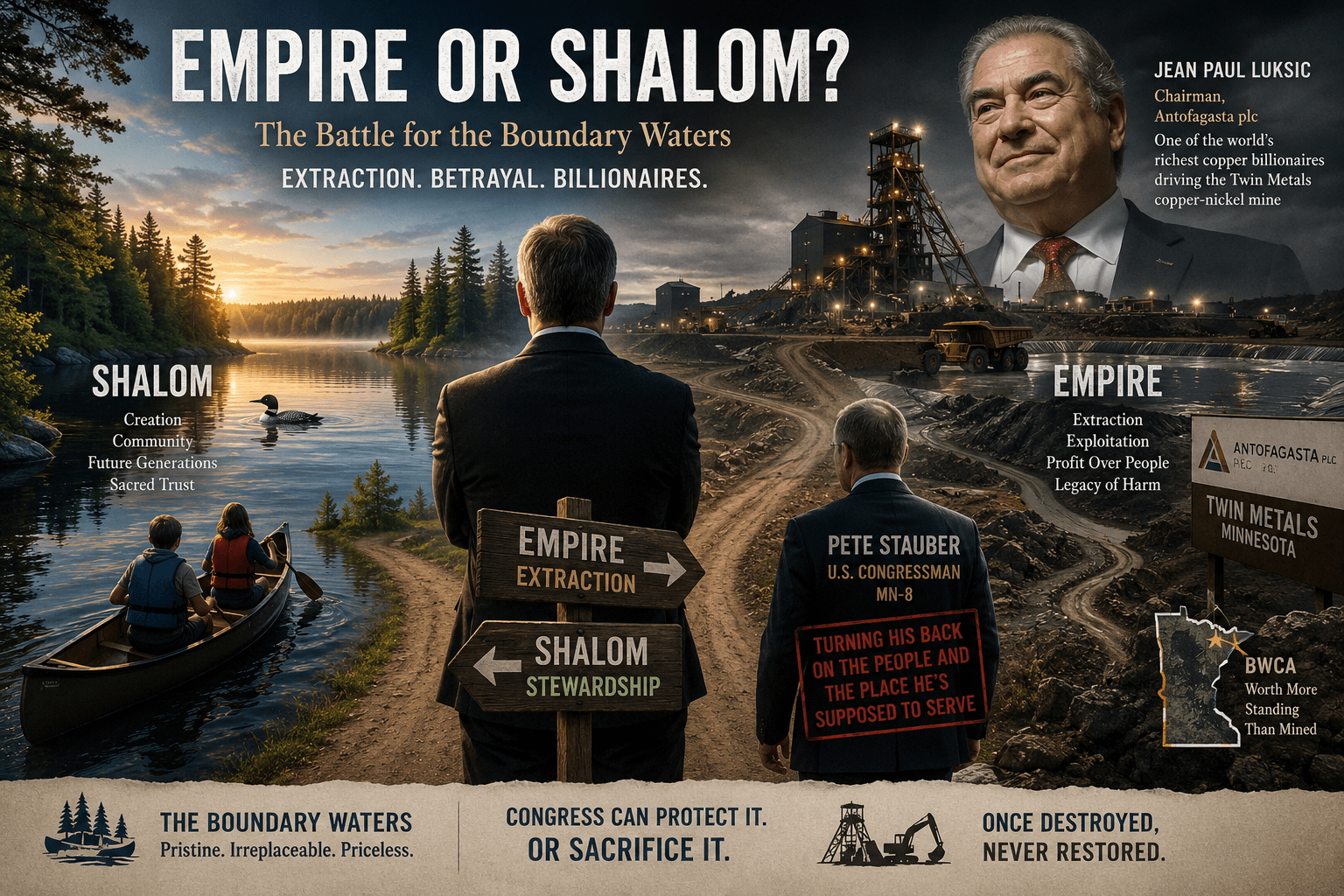
How power overrides people to take away the Boundary Waters
Peter T. Brandt · SeePhas.com · July 2026
~6 minute read · Part of the What Kind of World Are We Building? series
The Boundary Waters Canoe Area Wilderness is 1.1 million acres of interconnected lakes and rivers in northeastern Minnesota. It is the most visited wilderness in the United States. It supports 17,000 jobs in the surrounding communities. The Ojibwe people have fished and hunted there under treaty rights since 1854. The Federal Government designated at as a wilderness area in 1926. Families have canoed it for generations.
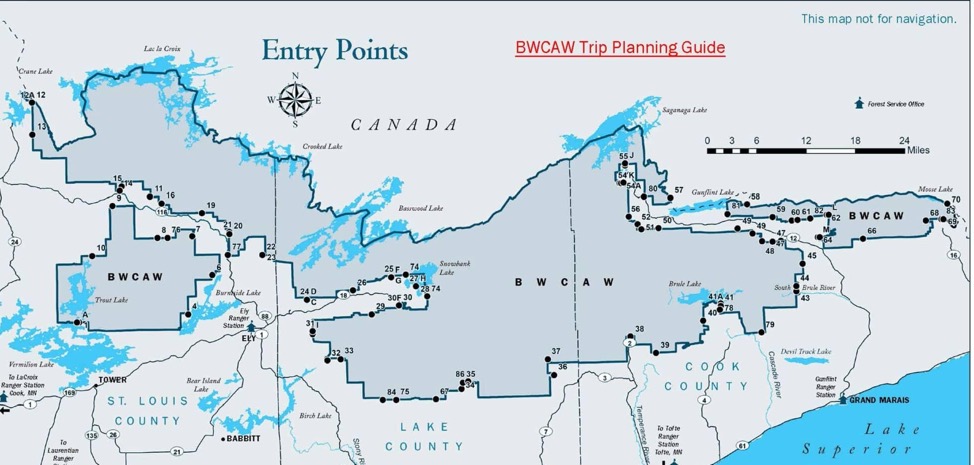
The question before the country is whether to risk all of that for a copper mine.
The Mine That Nobody Asked For
On April 27, 2026, the United States Senate voted 50-49 to open its watershed to a copper mine. The President signed the legislation the same day.
Nobody who lives there asked for this. Seventy percent of Minnesotans opposed it. Six hundred and fifty thousand Americans submitted public comments opposing the mine — 98 percent of them in favor of protection. It didn’t matter.
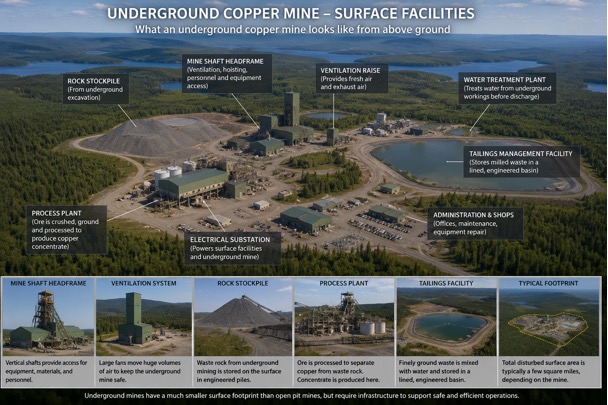
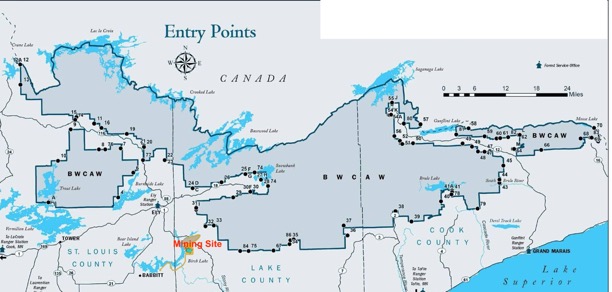
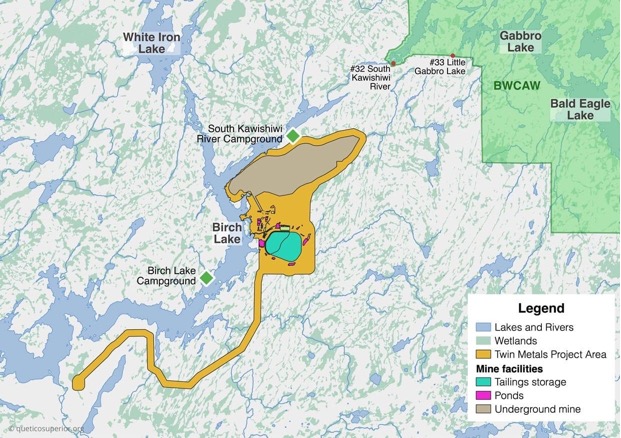
The proposed mine — Twin Metals Minnesota — would be located on federal land in the Superior National Forest, seven miles east of Ely, at the shore of Birch Lake. The lake drains directly into the Boundary Waters watershed. The mine would extract copper and nickel through a sulfide-ore process — the same process that has contaminated rivers, lakes, and groundwater at mines across the United States and Canada with extraordinary consistency. The U.S. Forest Service, after a two-year comprehensive scientific review, concluded that sulfide-ore copper mining in this watershed would pollute the Boundary Waters in ways that could not be fixed or mitigated. In January 2023, the Biden administration formalized that conclusion with a 20-year mineral withdrawal moratorium, protecting 225,000 acres of the Superior National Forest from mining development.
What happened and who benefits
The mine is owned by Twin Metals Minnesota, a subsidiary of Antofagasta — a Chilean mining conglomerate owned by the Luksic family, the wealthiest family in Chile.
Shortly after Trump’s 2016 election victory, Andrónico Luksic purchased a $5.5 million Washington D.C. mansion then rented it to Ivanka Trump and Jared Kushner during the first Trump term — while simultaneously suing the federal government to advance his Minnesota mining leases. The leases were approved a year after they moved in.
In the second term, Twin Metals paid $380,000 to a lobbying firm run by Trump’s former Interior Secretary. Then on January 6, 2026, the Trump Interior Department made its move: it re-submitted the three-year-old Biden-era mining protection to Congress, to withdraw it, claiming for the first time in history that it was subject to the Congressional Review Act — a procedural tool requiring only a simple majority, immune to filibuster. Six days later, Minnesota Representative Pete Stauber introduced the resolution. The House passed it in one day. The Senate passed it 50-49. Trump signed it April 27, 2026.
No environmental review. No public process. Six hundred and fifty thousand public comments — discarded.
The copper will be processed in China — where Antofagasta does its smelting. The jobs go to northeastern Minnesota, briefly. The profit goes to a Chilean billionaire. The refined metal goes to China. The water, if contaminated by sulfide-ore mining, does not come back.
The BWCA is an economy
The Studies — What the Economics Actually Show
The mining industry’s argument is jobs.
Twin Metals claims the mine would directly employ 750 people long-term and create approximately 1,500 spinoff jobs — roughly 2,250 positions total. For a region that has watched its iron ore economy contract for decades, that is a compelling offer. It is also, according to the best available economic research, a false choice.
The BWCA Economy
In 2018, Harvard economist James Stock — former chair of Harvard’s economics department — conducted an independent peer-reviewed study comparing two scenarios over 20 years: the mine opening, or the wilderness being protected. He ran the model 72 times across different economic assumptions. In 96 percent of scenarios, protecting the wilderness produced more jobs and more income. The mine promises 750 permanent jobs. The existing wilderness economy supports 17,000.
| 17,000 Jobs Supported by BWCA tourism and recreation | $900M Annual Economy Generated by the Boundary Waters region | 165,000+ Annual Visitors Most visited wilderness in the United States | 20% National Forest Freshwater Of all freshwater in the entire National Forest System |
Predicted BWCA Economy — Over 20 Years (Wilderness Protected)
| 4,500 More Jobs vs. mining scenario — Harvard study, 72 scenarios | $900M annual economic contribution – $18.0B over 20-years If the wilderness is protected | Protection outperforms mining economically | 21,500+ Jobs Sustained Wilderness tourism jobs preserved and growing |
Twin Metals Mine — What the Numbers Show
| 750 direct jobs / 2,250 total with spinoff — mine’s own projection | $163M total annual economic contribution – $3.3B over 20 years. 25 yrs Mine Life Then ore runs out — jobs disappear, pollution does not | $500M+ Property Value Loss Projected loss if mine opens — 23% of owners would leave | China Where Profits Go Antofagasta smelts copper in China — profits leave the region |
Mining increases jobs initially — the construction phase is real — but in 89 percent of cases, copper mining ends up negative for jobs and negative for income over the long term, as tourism declines, property values fall, and the amenity economy that draws new residents and businesses collapses.
In 2017 another economic study had been done by Key Log Economics it documented what specifically would be at risk, the 17,000 local tourism jobs directly threatened by mining-related water pollution and environmental degradation. If the mine opens, 23 percent of property owners in the proposed mining area would move away, and property value losses would exceed $500 million.
The mining industry is also, by its nature, a boom-and-bust economy. The 750 jobs are not permanent. When the ore runs out or prices fall — and copper prices are notoriously volatile — the jobs disappear. The pollution does not.
This is not a trade-off.
It is a bad deal dressed as a necessary one
What this is
The shalom tradition describes a world in which costs and benefits are fairly distributed — in which the commons are protected, and communities participate in decisions that shape their lives. Empire describes the opposite: benefits flowing to those closest to power, costs flowing to communities, to the land, to future generations.
The Boundary Waters case fits the second description precisely. A foreign corporation with a documented financial relationship to the president’s family used lobbying, a manufactured legal pathway, and a procedural maneuver to overturn a protection supported by 650,000 Americans. The communities that depend on the Boundary Waters answered — loudly, clearly, in extraordinary numbers.
They were ignored.
That is not a policy disagreement.
That is what empire looks like when it wears a suit.
The fight is not over — here is what you can do
The fight is not over — here is what you can do
The Senate vote removed the federal mining protection. It did not open the mine. Twin Metals has not submitted a single permit application to Minnesota state agencies. Before any mine can be built, Twin Metals must run a full Minnesota state environmental review and permitting process — one of the most rigorous in the nation. That process has not started. Minnesota still has real authority to stop this.
Cancel the state mineral lease — before the end of 2026. Governor Walz and the DNR have the legal authority to cancel one specific Twin Metals state mineral lease before the end of this year. The lease language is explicit: after 35 years without mining a single ounce of ore or paying Minnesota a single dollar in royalties, Twin Metals has defaulted. The DNR’s own 1995 precedent affirms the cancellation right. This lease is not within the current mine footprint, but Twin Metals is already drilling there. Canceling it sets a precedent and signals the state’s position. The window closes December 31, 2026. Contact Governor Walz at mn.gov/governor.
Support the organizations doing the legal work. Save the Boundary Waters (savetheboundarywaters.org) and Friends of the Boundary Waters (friends-bwca.org) are pursuing active litigation under the Minnesota Environmental Rights Act and exploring federal legal challenges. Their work is what stands between the Boundary Waters and the drill.
Vote in November. The Minnesota Legislature is not in session and will not reconvene until after the November 2026 elections. The composition of the next legislature will determine whether permanent state-level protection legislation has any chance of passing. The Boundary Waters will be on the ballot — even when it isn’t listed there.
Bear witness.
Name it accurately.
Refuse to accept that it is inevitable.
Peter T. Brandt writes for SeePhas.com
A more full investigative account — Empire at the Water’s Edge — and the What Kind of World Are We Building? series are available upon request.


twin metals; copper and gold?
insure that not a bit of ore sees light of day in mining operation!
death penalty for acid runoff !’
LikeLike
I agree with you that we should do everything we can to ensure mining never takes place in this extraordinary wilderness.
The part about the death penalty, though, takes the conversation in a direction that reflects the very logic of empire—meeting wrong with vengeance. I think it weakens an otherwise compelling argument.
If our goal is to protect the BWCA, we should do it by standing firmly for what is right: stewardship, accountability, and the common good, without abandoning the values we’re trying to defend.
LikeLike